


Your assessment is carried out by Warwick Theophane and Raphael Whitmore, both NSA Level 6 qualified and IFSM registered.
If you manage several buildings, consistency matters more than another one-off contractor. SeeForth carries out fire risk assessments across whole portfolios: the same named assessors, the same report format and the same standard on every site.
Every assessment is independent. You get an accurate report rather than a pitch for follow-on work. Where the action plan raises maintenance issues, we can help you scope and prioritise them, and your documentation stays consistent across every building you manage.
“Our last assessor retired and we’ve no idea if the reports are still valid.”
“We manage a dozen buildings and tracking which ones are current is a nightmare.”
“The Building Safety Act mentions a Responsible Person. Is that us?”
“We’ve got an assessment on file, but nobody’s told us if it’s still adequate.”
If any of that sounds like your portfolio, a free gap-check tells you exactly where you stand, with no obligation.
Under the Regulatory Reform (Fire Safety) Order 2005, as amended by the Fire Safety Act 2021 and the Building Safety Act 2022, the Responsible Person for any non-domestic premises, or any residential building with common areas, must have a suitable and sufficient fire risk assessment. Since 1 October 2023 it must be recorded in full whatever the size of the building, and it must be kept under review. The Fire Safety (England) Regulations 2022 add further duties for blocks of flats, which we set out below.
As a managing agent or landlord, you are usually the Responsible Person. A missing, outdated or inadequate assessment exposes you to enforcement action, insurance problems and, if there is a fire, personal legal responsibility.
SeeForth's assessors are Level 6 qualified, which is degree level and the highest individual standard in the UK, and both are IFSM registered. Every written report is delivered within 48 hours of the site visit.

Fire Risk Assessor | NSA Level 6 Diploma in Fire Risk Assessment | IFSM registered
Warwick takes a commercially focused, outcome-led approach to fire risk assessment. He helps building owners understand their responsibilities clearly and put proportionate, effective safety measures in place.
Covers: Essex, Suffolk and London
Fire Risk Assessor | NSA Level 6 Diploma in Fire Risk Assessment | IFSM registered, Technician grade
Raph brings First Class Honours in Electronic Engineering and over 20 years across field service, facilities management and workplace training. He explains fire safety requirements in plain, practical terms, so compliance is straightforward rather than daunting.
Covers: North London, Essex, Hertfordshire, Bedfordshire and Cambridgeshire
A fire strategy sets out how your building is designed to protect the people in it, covering means of escape, compartmentation, fire detection and firefighter access. It is the reference document that building control, insurers and the Building Safety Regulator expect to see.
Many existing buildings have never had one. If your building is being refurbished, changing use or registering with the Building Safety Regulator, a current fire strategy is required. Where none exists, a retrospective fire strategy records the fire safety provisions as built.
SeeForth prepares fire strategies for new and existing buildings alongside our fire risk assessments, so one accountable partner keeps your compliance documents aligned and up to date.

✓ Full on-site inspection of the premises
✓ Assessment of all fire hazards, risks and existing controls
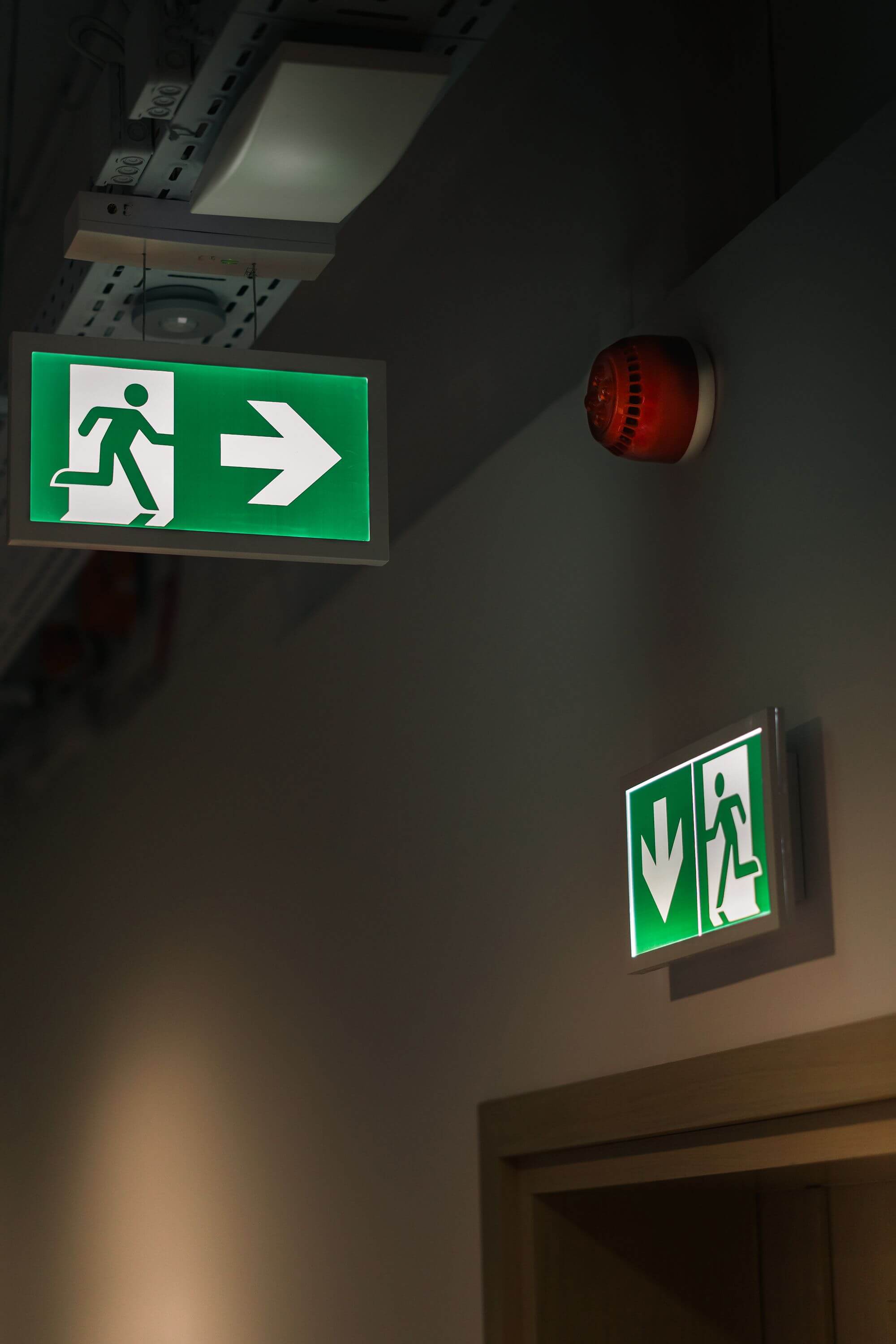
✓ Review of means of escape, detection systems, signage and suppression
✓ Written report with prioritised action plan
✓ Delivered within 48 hours of the visit
✓ Practical guidance on prioritising any actions raised
A fire risk assessment is a structured review of a building to identify fire hazards, evaluate the risk to occupants and set out the measures needed to reduce or eliminate those risks. Under the Regulatory Reform (Fire Safety) Order 2005 it is a legal requirement for all non-domestic premises and the common areas of residential buildings, and since 1 October 2023 it must be recorded in writing whatever the size of the premises.
Yes. All business premises, HMOs and the communal parts of residential blocks require a fire risk assessment under the Regulatory Reform (Fire Safety) Order 2005, as amended by the Fire Safety Act 2021 and the Building Safety Act 2022. Failing to comply can lead to enforcement notices, unlimited fines and, in serious cases, prosecution of the Responsible Person.
The Responsible Person is whoever has control of the premises, typically the employer, building owner, landlord, facilities manager or managing agent. They are legally accountable for ensuring a suitable and sufficient fire risk assessment is carried out, kept up to date and acted upon.
Type 1 is a non-destructive assessment of the common parts and is the standard for most blocks of flats. Type 2 adds destructive sampling of the common parts where structural concerns exist. Type 3 extends a non-destructive assessment into the flats themselves, and Type 4 covers both common parts and flats with destructive inspection. We advise which type your building needs before anything is booked.
Best practice is a review at least annually, and sooner if the building layout changes, occupancy increases, a fire occurs or other significant changes arise. An out-of-date assessment can be treated by enforcing authorities as though you have none at all.
Your written report, including a prioritised action plan, is delivered within 48 hours of the site visit. If anything urgent is found on the day, we flag it to you immediately rather than waiting for the report.
It depends on the size, type and complexity of the building. We provide a fixed quote before anything is booked, and discounted rates for portfolios with multiple sites, so there are no surprises on the invoice.
Yes. Remedial works arising from the assessment can be handled through SeeForth planned maintenance, so you have one accountable partner from assessment through to completion, with photographic evidence and documentation for your compliance records.
For blocks of flats, HMOs, sheltered housing and student accommodation we assess to BS 9792:2025, the code of practice for fire risk assessment in housing, which replaced PAS 79-2:2020 on 1 August 2025. For offices, shops, schools and other non-domestic premises we use PAS 79-1:2020. The report format follows the standard, so it is recognised by enforcing authorities, insurers and the Building Safety Regulator.
They apply to residential buildings with two or more sets of domestic premises and have been in force since 23 January 2023. Every such building must give residents fire safety instructions and information about fire doors. Buildings over 11 metres must check communal fire doors every three months and flat entrance doors every year. Buildings over 18 metres or seven storeys must also give the fire and rescue service floor plans and external wall information, fit a secure information box and wayfinding signage, and check lifts and other firefighting equipment monthly. Our assessment checks whether these duties are being met and lists any gaps in the action plan.
Yes. Both assessors hold the NSA Level 6 Diploma in Fire Risk Assessment and are registered with the Institute of Fire Safety Managers (IFSM). Since 1 October 2023 the Building Safety Act requires the fire risk assessment record to name the assessor and their organisation, so their names appear on every report we issue.