
Roof repairs
Overview
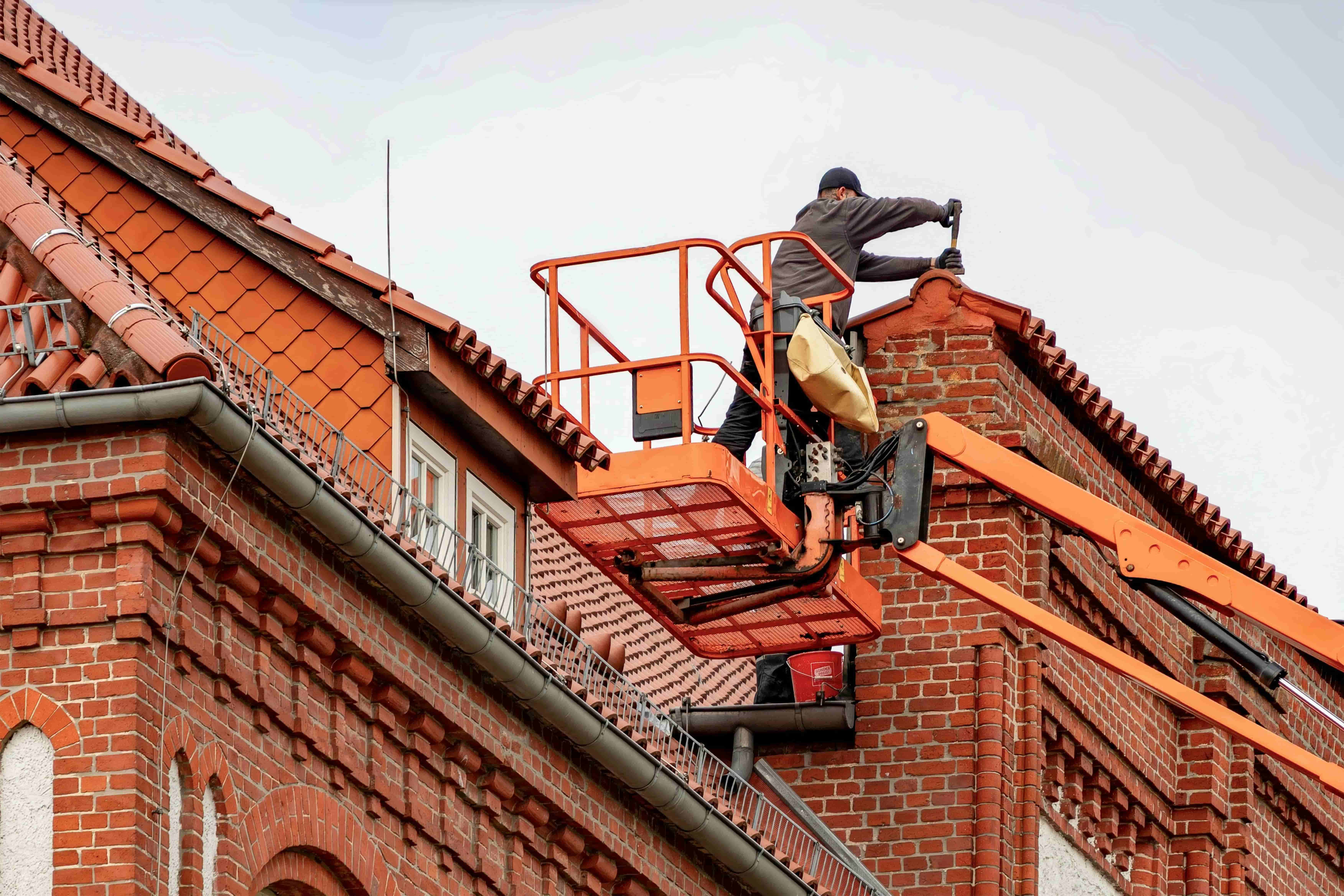
Our roof repair service ensures safe, effective fixes using rope access or MEWPs. We provide a clear scope of work before starting and document all repairs with photos, minimising disruption while protecting your property from further damage.

Comprehensive roof inspection
Identifies issues early and ensure your roof stays safe and weatherproof.

Prevent costly damage
Prevents costly damage by addressing minor roof issues before they become major structural problems.

Expert care
Skilled professionals handle every repair with precision, ensuring long-lasting protection and reliability.

Emergency repairs
Fast-response repairs to prevent further damage and keep your property safe and operational.

Roof repairs: the full guide
Most roof leaks on commercial and residential buildings come from a small number of causes. Slipped or broken tiles, ridge and hip tiles that were bedded in mortar and have let go, failed lead flashings, blocked outlets on flat roofs, and membrane laps that have opened. None of them need a new roof. They need someone to get up there safely, find the fault and fix it properly.
This guide covers the repairs we carry out, how we reach the roof without scaffolding, the standards that apply, what affects the price, and the questions we are asked most by property managers in London, Essex, Hertfordshire and Cambridge.
The repairs we carry out
- Tile and slate repairs. Replacing slipped, cracked and missing tiles and slates, refixing loose ones and matching reclaimed materials on older roofs.
- Ridge, hip and verge work. Rebedding or, more often, replacing mortar-bedded ridge and hip tiles with a mechanically fixed dry ridge or dry verge system.
- Flashings. Redressing and replacing lead flashings at chimneys, parapets, abutments and around rooflights.
- Flat roof repairs. Clearing and resealing outlets, patch repairs to felt and single-ply membranes, and dealing with ponding and blistering.
- Rainwater goods. Refixing brackets, resealing joints and replacing sections of gutter and downpipe found during a gutter clearance.
- Emergency make-safe. Temporary sheeting and sealing after storm damage so the building is watertight while a permanent repair is priced.
- Condition surveys. A photographed survey of the whole roof with a list of defects in priority order, so you can plan and budget.
How we work
- Survey. We inspect the roof, photograph the defects and trace the leak back to its source, which is often some distance from the wet patch inside.
- Scope and price. You receive a written scope of work with photographs before anything starts, so you know what is being fixed and why.
- Access. Repairs are carried out by rope access from tested anchors or from a MEWP. That avoids scaffolding, which on a repair job can cost more than the repair itself and take weeks to arrange.
- Repair. Work is done to the manufacturer's instructions and the relevant British Standard, with matching materials where the roof is visible.
- Report. A post-works photo report showing each repair before and after, with any further recommendations.
At The Hudson, a residential building in Kennington, south London, a condition survey found vented ridge tiles letting in driving rain and ridge tiles across the roof that were broken or bedded in a mix of mortar and mastic. We removed every ridge and hip tile, fitted a mechanically fixed dry vented ridge system throughout and installed new ridge tiles. The work was completed on 22 February 2023 with a full photo report. Read the dry ridge case study.
Standards and safety
- BS 5534:2014+A2:2018. The code of practice for slating and tiling. It requires ridge, hip and verge tiles to be mechanically fixed rather than relying on mortar alone, which is why we recommend a dry ridge system when mortar-bedded ridges fail.
- Work at Height Regulations 2005. Every roof job is planned under the regulations with a site-specific risk assessment and method statement, tested anchors for rope work, and exclusion zones below.
- Manufacturer's instructions. Dry ridge systems, membranes and sealants are installed as their manufacturers specify, so product guarantees stand.
- Conservation areas and listed buildings. Where a roof is visible and protected we match the original materials and advise on whether consent is needed.
What affects the price
- Access. Rope access or a MEWP is far cheaper than scaffolding, but a roof with no anchors or no ground space for a platform takes more planning.
- Extent. Refixing a handful of tiles is a half-day. Renewing every ridge and hip on a large roof is several days.
- Materials. Reclaimed slates and handmade clay tiles cost more than concrete tiles. Lead is priced by weight.
- Height and exposure. Taller and more exposed roofs need more time and more weather days.
- Urgency. An emergency make-safe outside normal hours is priced differently from a planned repair.
Where we work
We repair roofs on residential blocks, offices, schools, student accommodation and industrial buildings across Greater London, Essex, Hertfordshire and Cambridge. Most of our roof work comes from defects we found during a gutter clear or a window clean, which is one reason our photo reports are worth reading.
Signs it is time to look at the roof
- Damp patches or staining on top-floor ceilings after heavy rain.
- Tiles or slates found on the ground, or visible gaps from the street.
- Mortar debris in the gutters, which usually means ridge or verge bedding is breaking up.
- Vegetation growing in gutters and valleys, or moss carpets on the north slope.
- Standing water on a flat roof more than a day after rain.
Roof repair questions
Do you need scaffolding to repair a roof?
Usually not. We work by rope access from tested anchors or from a MEWP. Scaffolding is only needed where a large area of roof has to be stripped, and we will tell you if that is the case.
Can you fix a leak in an emergency?
Yes. We make the roof watertight first with temporary sheeting or sealing, then survey the damage and price the permanent repair.
What is a dry ridge system?
A system that fixes ridge and hip tiles with screws and clips onto a ventilated roll, instead of bedding them in mortar. It cannot crack or wash out, ventilates the roof space and meets BS 5534. We fitted one throughout at The Hudson in Kennington.
Do you survey before quoting?
Yes. Leaks rarely start where the water shows inside, so we inspect and photograph the roof before we give you a scope and a price.
Can you match old tiles and slates?
In most cases. We source reclaimed slates and tiles and match profiles and colours as closely as possible, which matters on visible roofs and in conservation areas.
Do you repair flat roofs?
Yes. Outlets, membrane laps, blisters and ponding areas are the usual problems, and most can be patch-repaired without replacing the whole covering.
How do I know the work has been done?
You receive a photo report showing each repair before and after, plus any further recommendations. Managing agents use it for leaseholder and insurer records.
Delivering high standards, safely
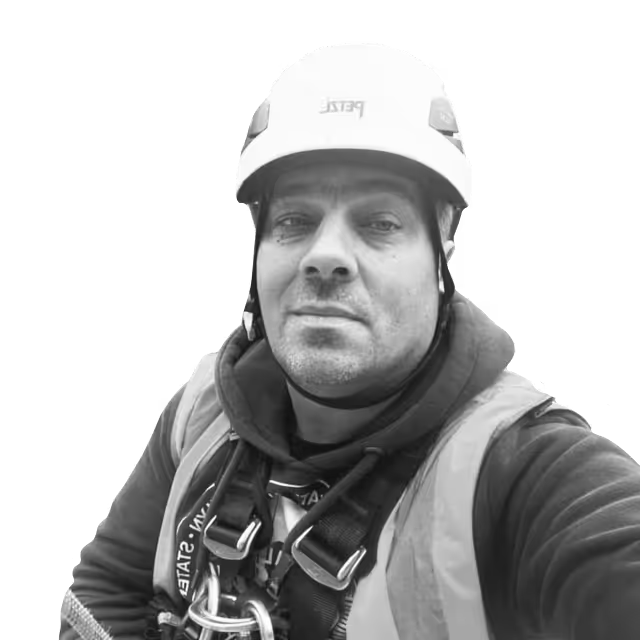
Meet Norbert, a seasoned IRATA Level 3 Supervisor with nearly 20 years' experience leading complex rope access operations
Norbert is an IRATA Level 3 Supervisor with nearly 20 years in rope access across Europe and the Middle East. He has led work on 75-storey buildings, iconic bridges, wind farms, oil and gas platforms and lighthouses. Calm, organised and resilient, he delivers safely on some of the world's most challenging sites.







Rated excellent for communication by a student accommodation client

"Good comms, great team."
Contact us about your property
Let us know which of our specialist cleaning or maintenance solutions you need.