
Bird-proofing
Overview
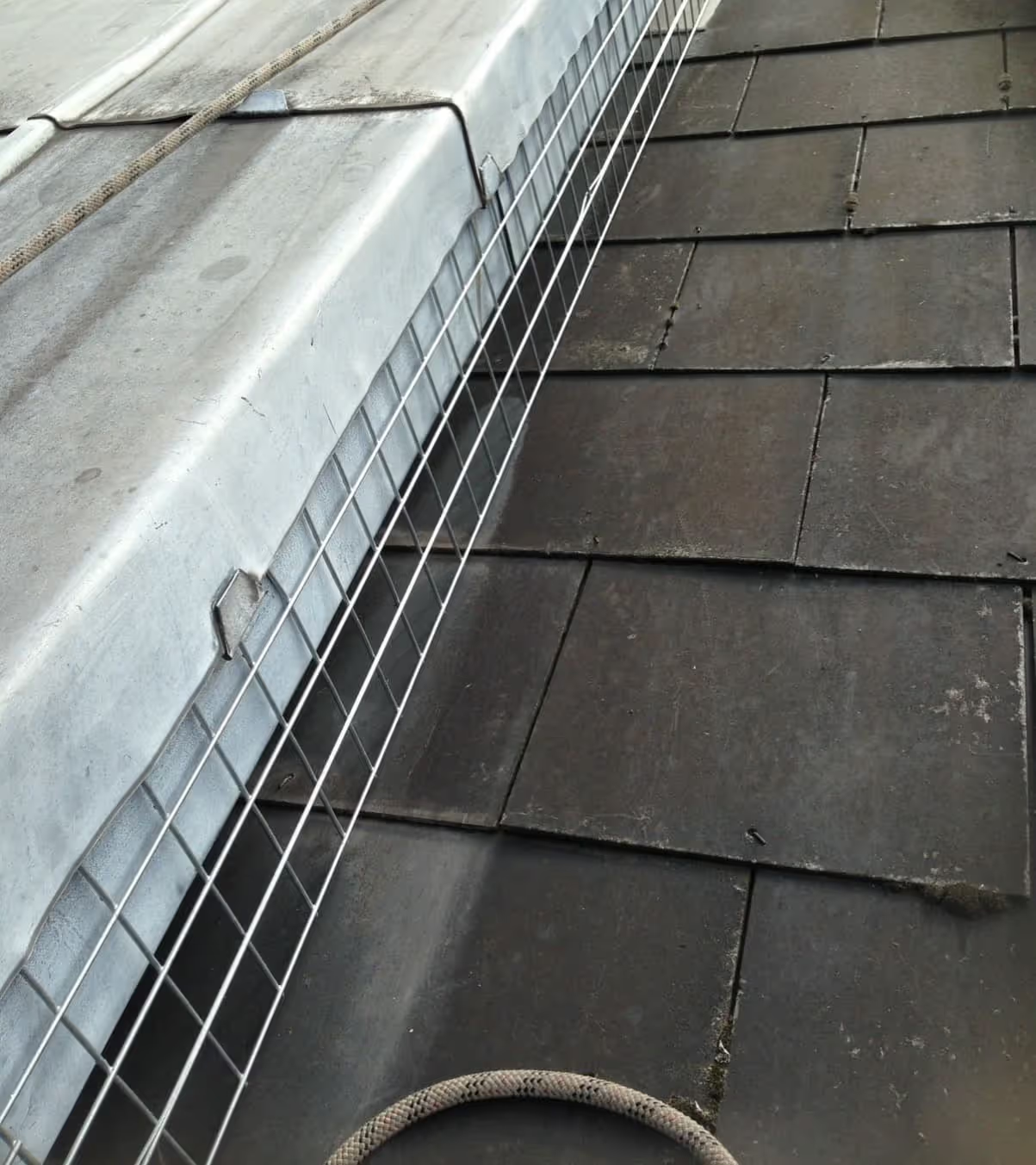
We install discreet bird deterrents, including spikes, netting and wires, to protect your building from damage and mess. Safe access via rope or MEWP ensures efficient, non-disruptive installation even in hard-to-reach areas.

Prevent property damage
Stops birds from nesting or roosting, protecting your building from droppings, corrosion, and blocka

Humane methods
Uses safe, non-harmful deterrents to protect property without harming birds.

Ideal for commercial properties
Keeps business premises clean, compliant, and free from disruptive bird activity.

Preserve decorative facades
Discreet installations that protect stonework and architectural details without spoiling the look of your building.
Bird-proofing: the full guide
Pigeons and gulls are part of life in London and the towns around it. On a building they are a maintenance problem. Droppings are acidic and stain stone, render and cladding. Nests block gutters and outlets. Fouled walkways, fire escapes and plant rooms are a slip and hygiene risk, and cleaning them up every few weeks costs more than stopping the birds landing in the first place.
This guide covers the deterrents we install, how we choose between them, the law on wild birds, what affects the price, and the questions property managers in London, Essex, Hertfordshire and Cambridge ask us most.
The deterrents we install
- Spikes. Stainless steel or polycarbonate spikes fixed to ledges, sills, signage, parapets and pipework. They stop birds landing without harming them and are close to invisible from the street.
- Netting. Tensioned netting closes off larger areas: light wells, loading bays, plant decks, balconies, the undersides of canopies and the space under solar arrays. Mesh size is matched to the bird. 50 mm for pigeons, 75 mm for gulls and 19 mm where small birds are the problem.
- Post-and-wire. Fine sprung wires on short posts along ledges and cills. The wires are hard to see and suit listed or decorative façades where spikes would look wrong.
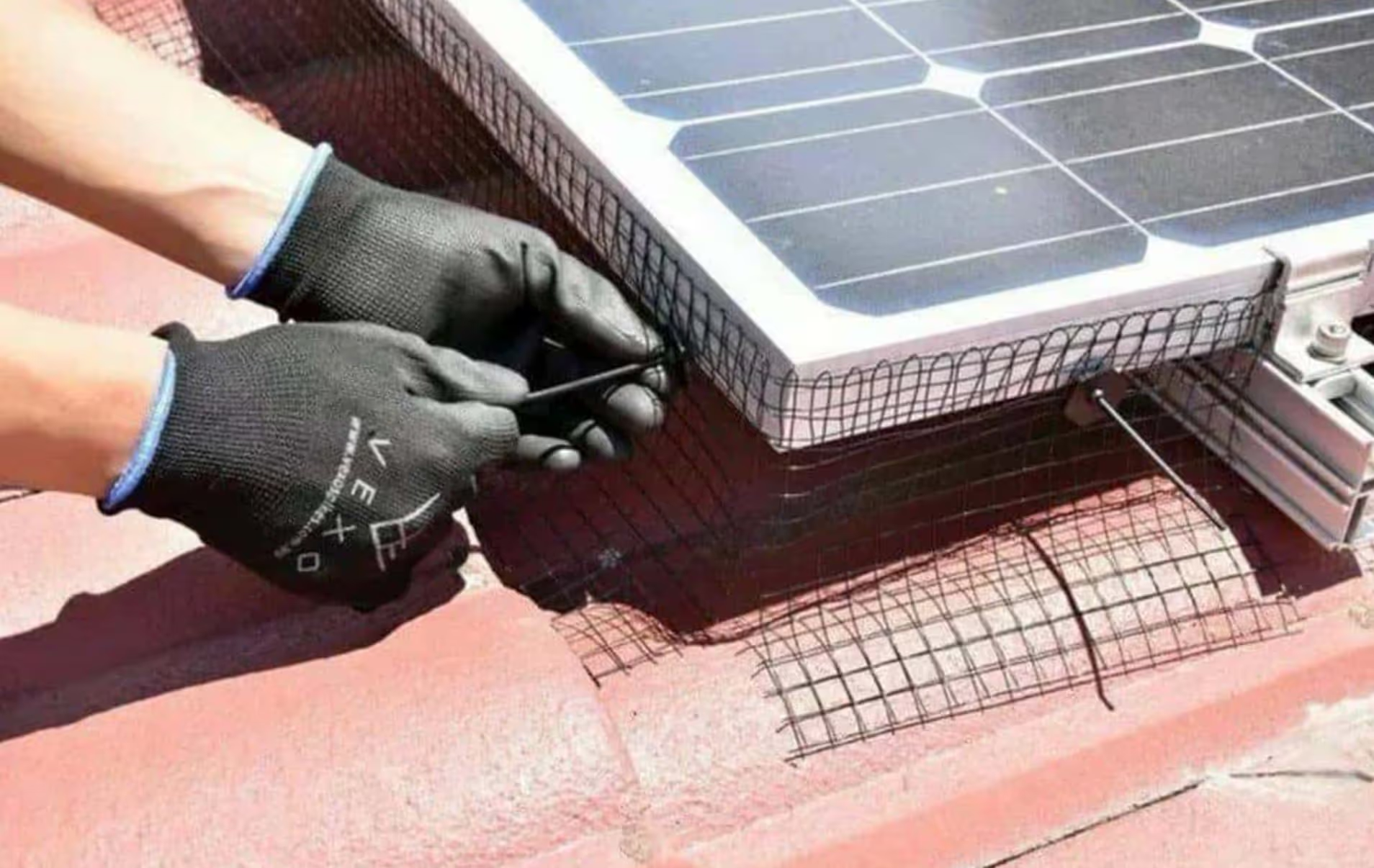
- Solar panel mesh. A mesh skirt clipped around the edge of an array to stop pigeons nesting beneath the panels. It clips to the frame without drilling the panel or the roof.
Most buildings need a mix. A typical job is spikes on the ledges the birds land on, netting across the recess they roost in, and mesh under the solar panels.
What the service involves
- Survey. We visit, ideally at dusk or first thing, to see where the birds land, roost and nest rather than where the droppings happen to fall. We check for active nests and note the access route.
- Proposal. A drawing or marked-up photos showing what goes where, the fixing method and the finish, with a price. On listed buildings we advise on whether consent is needed for the fixings.
- Clean-down. Before anything is fitted the area is cleared of droppings and nesting material and disinfected. Droppings carry bacteria and fungal spores, so our operatives wear respiratory protection and the waste is bagged and removed.
- Installation. Deterrents are fixed by rope access or from a MEWP, so there is no scaffolding on the façade and the work is normally finished in a day or two.
- Report. Before and after photographs, with a note of the products used so future maintenance is easy.
The law on wild birds
All wild birds, their nests and their eggs are protected under the Wildlife and Countryside Act 1981. In practice that means three things for a bird-proofing job.
- We never remove a nest that is being built or is in use, and we do not disturb eggs or chicks.
- Where nests are present we plan the work for after the birds have fledged. The main nesting season runs from March to August, though pigeons can breed most of the year, so we check every site.
- The deterrents we fit stop birds landing or entering. They do not trap, poison or injure them.
Netting is inspected after installation to make sure no bird can get behind it and become trapped, and we advise on a check schedule.
What affects the price
- Length and area. Spikes and wire are priced per metre of ledge. Netting is priced by the area covered and the number of fixing points.
- Height and access. A ledge at first-floor level reached from a platform costs less than a parapet on a ten-storey block reached by rope.
- Clean-down. A heavily fouled roost needs a full clean and disinfection before fitting, which is priced separately.
- Substrate. Fixing into brick and concrete is straightforward. Stone, glazed cladding and listed façades need specialist fixings and sometimes consent.
- Finish. Colour-matched netting and wire, or stainless rather than polycarbonate spikes, cost more but last longer and look better.
Where we work
We install bird deterrents on offices, residential blocks, student accommodation, retail and industrial units across Greater London, Essex, Hertfordshire and Cambridge. The rope access and MEWP skills that let us reach high ledges without scaffold are the same ones we use for high-rise window cleaning and gutter clearance, so the three are often combined in one visit.
Bird-proofing questions
Is bird-proofing humane?
Yes. Spikes, netting and wires stop birds landing or getting in. They do not harm them. We never remove active nests and we plan around the nesting season.
Which birds cause the most problems?
Feral pigeons on ledges, plant decks and under solar panels, and gulls on flat roofs, especially near the coast and rivers. Starlings and sparrows occasionally get into soffits and cladding voids.
Will the deterrents damage the building?
No. Spikes and wire posts are fixed with adhesive or small screws, and netting hangs from wire tensioned between fixings at the edges. On listed buildings we choose fixings that can be removed without a trace and advise on consent.
How long does bird-proofing last?
Stainless steel spikes and tensioned netting last many years with an occasional check. Polycarbonate spikes and adhesive fixings degrade faster in full sun. We note the products used in your report so they can be maintained.
Do you clean up the droppings first?
Yes. Fitting deterrents over fouling traps the mess and the smell. The area is cleared, disinfected and dried before anything is installed, with the waste bagged and removed.
Can you stop pigeons nesting under solar panels?
Yes. A mesh skirt clipped around the edge of the array stops them getting underneath. It fixes to the panel frame without drilling. We can clean the panels on the same visit.
What happens if there is a nest in the way?
We leave it and come back once the young have fledged. Removing an active nest is an offence under the Wildlife and Countryside Act 1981, and no reputable contractor will do it.
Delivering high standards, safely
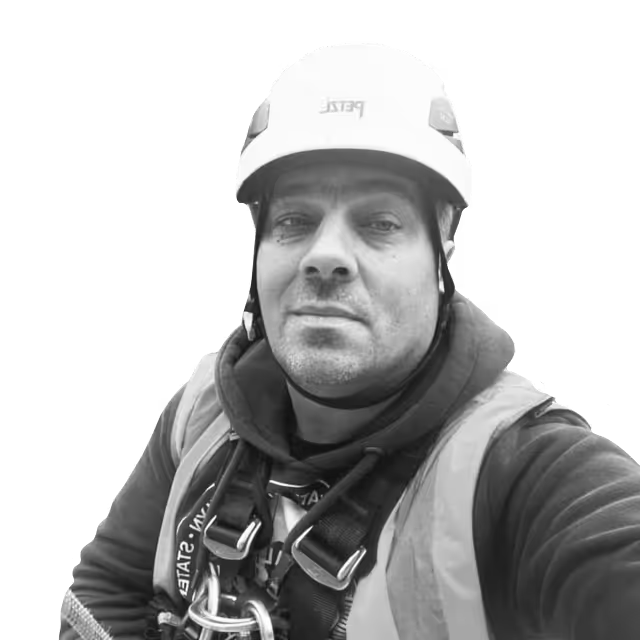
Meet Norbert, a seasoned IRATA Level 3 Supervisor with nearly 20 years' experience leading complex rope access operations
Norbert is an IRATA Level 3 Supervisor with nearly 20 years in rope access across Europe and the Middle East. He has led work on 75-storey buildings, iconic bridges, wind farms, oil and gas platforms and lighthouses. Calm, organised and resilient, he delivers safely on some of the world's most challenging sites.







Rated excellent for communication by a student accommodation client

"Good comms, great team."
Contact us about your property
Let us know which of our specialist cleaning or maintenance solutions you need.